


Arduino UNO Q – Powerful Linux & IoT Development Board
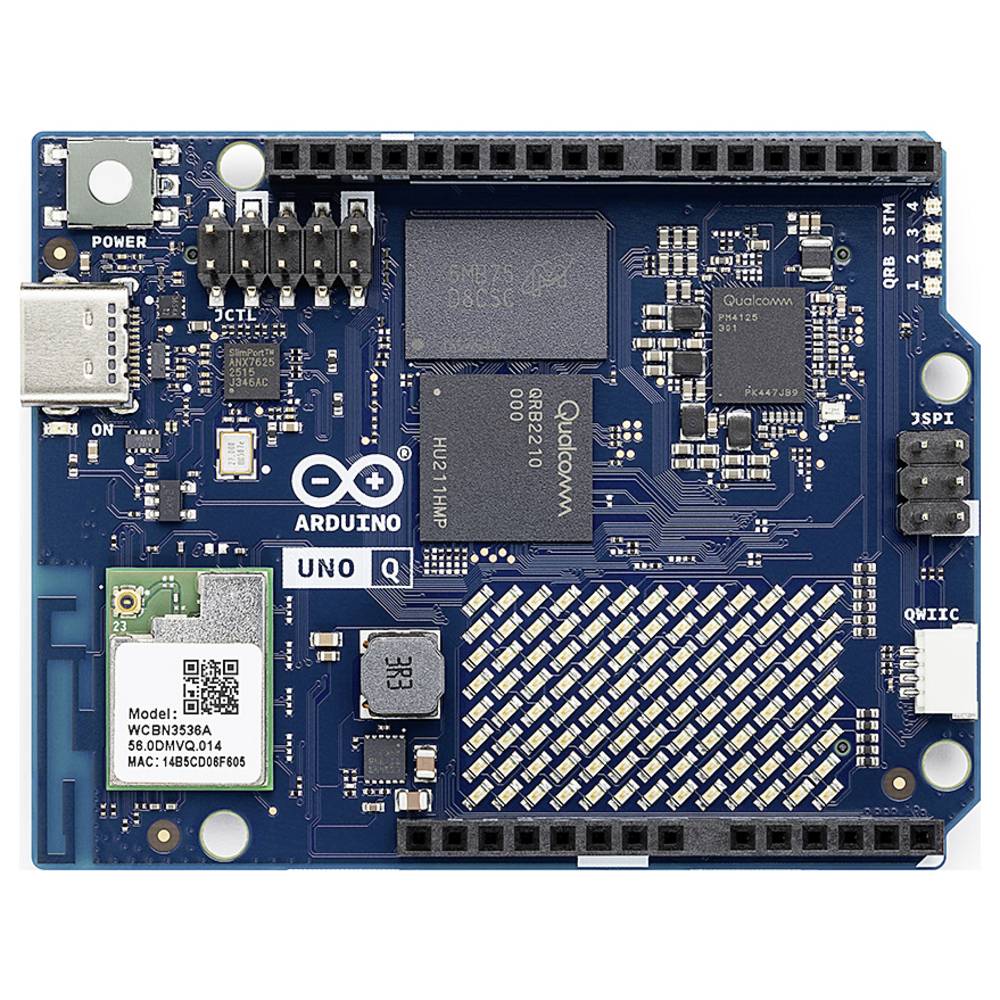
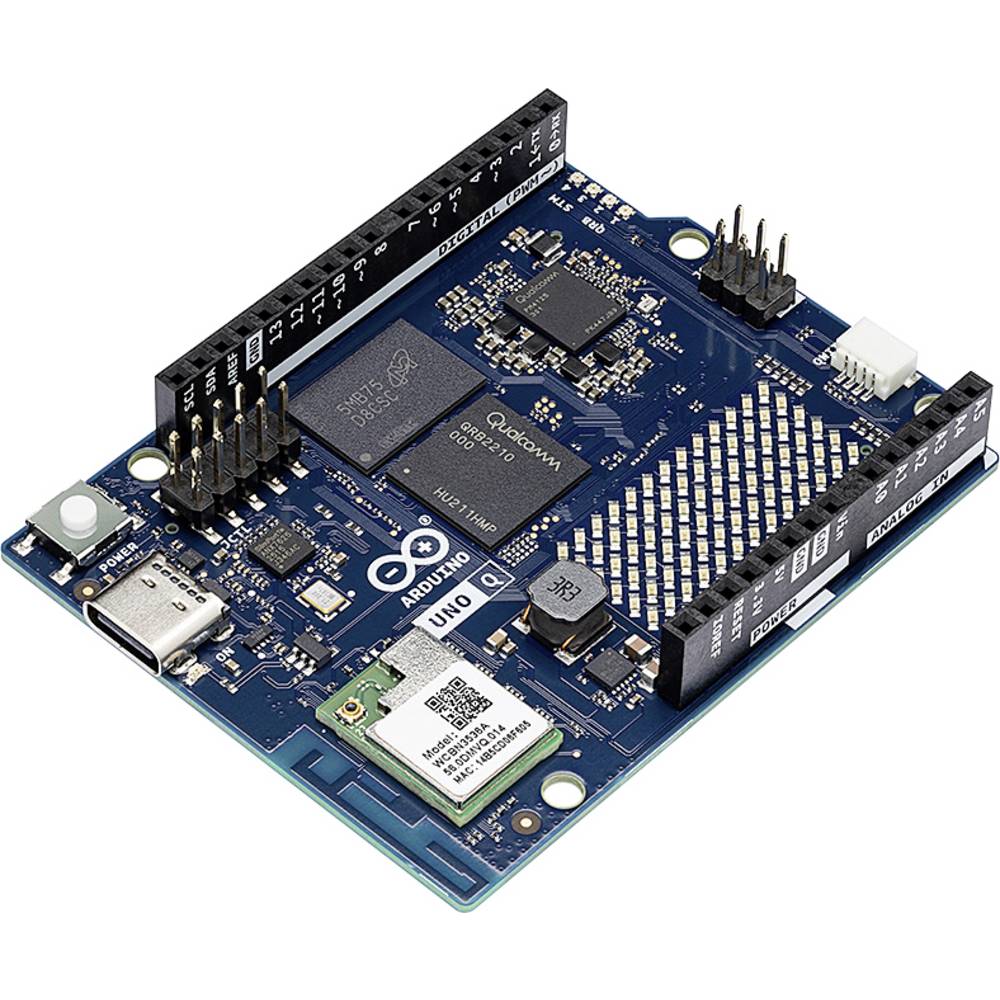
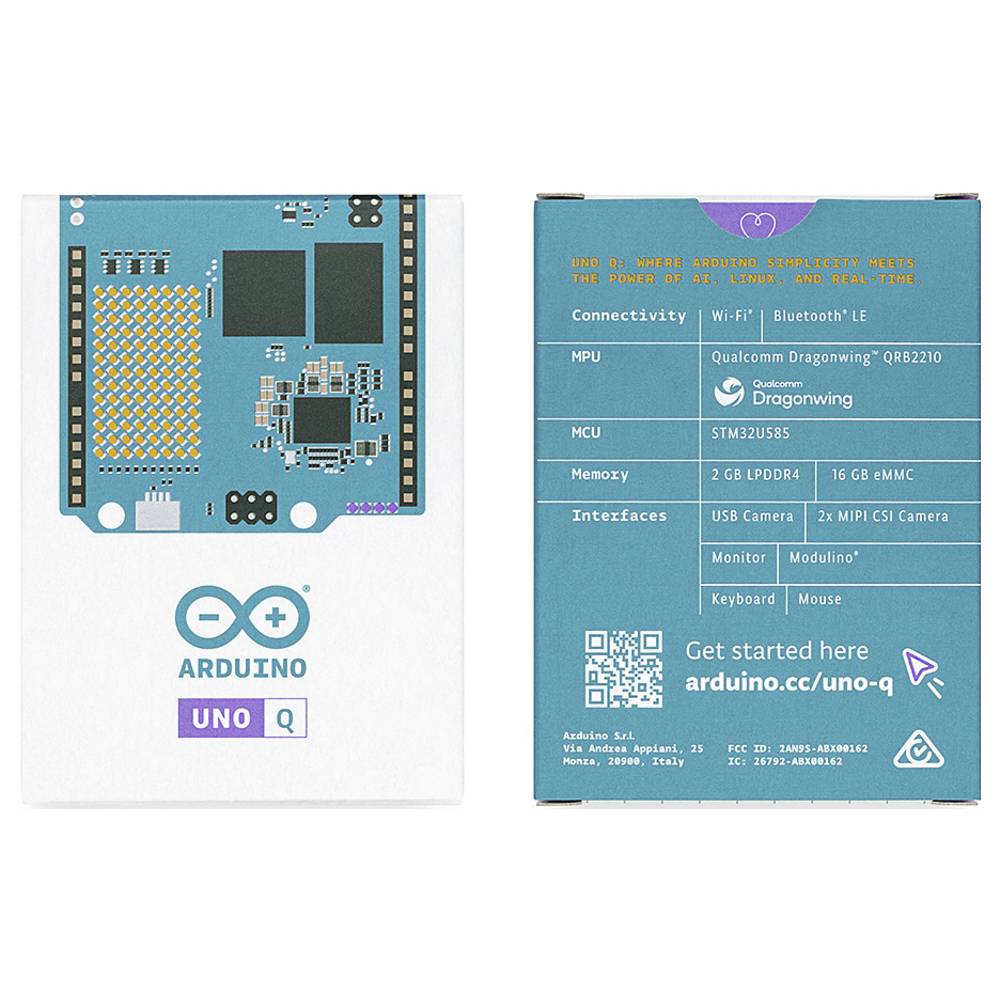
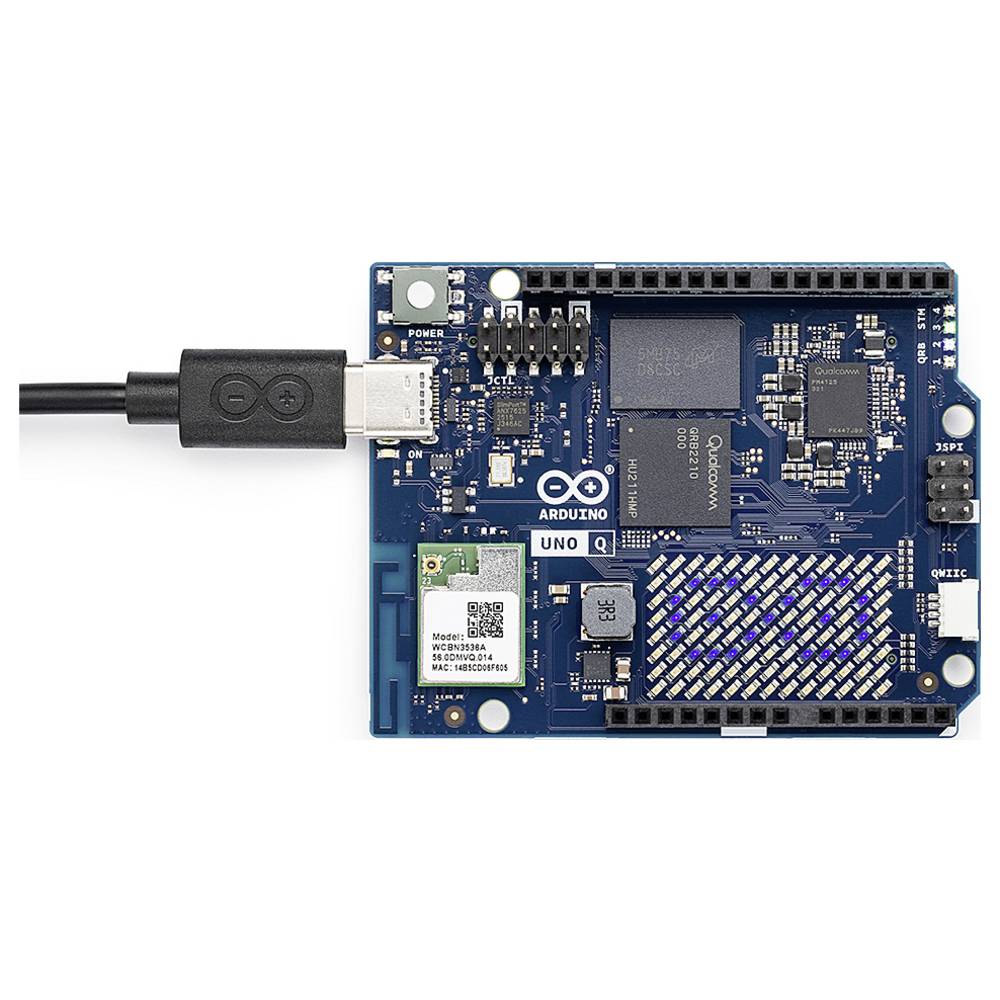
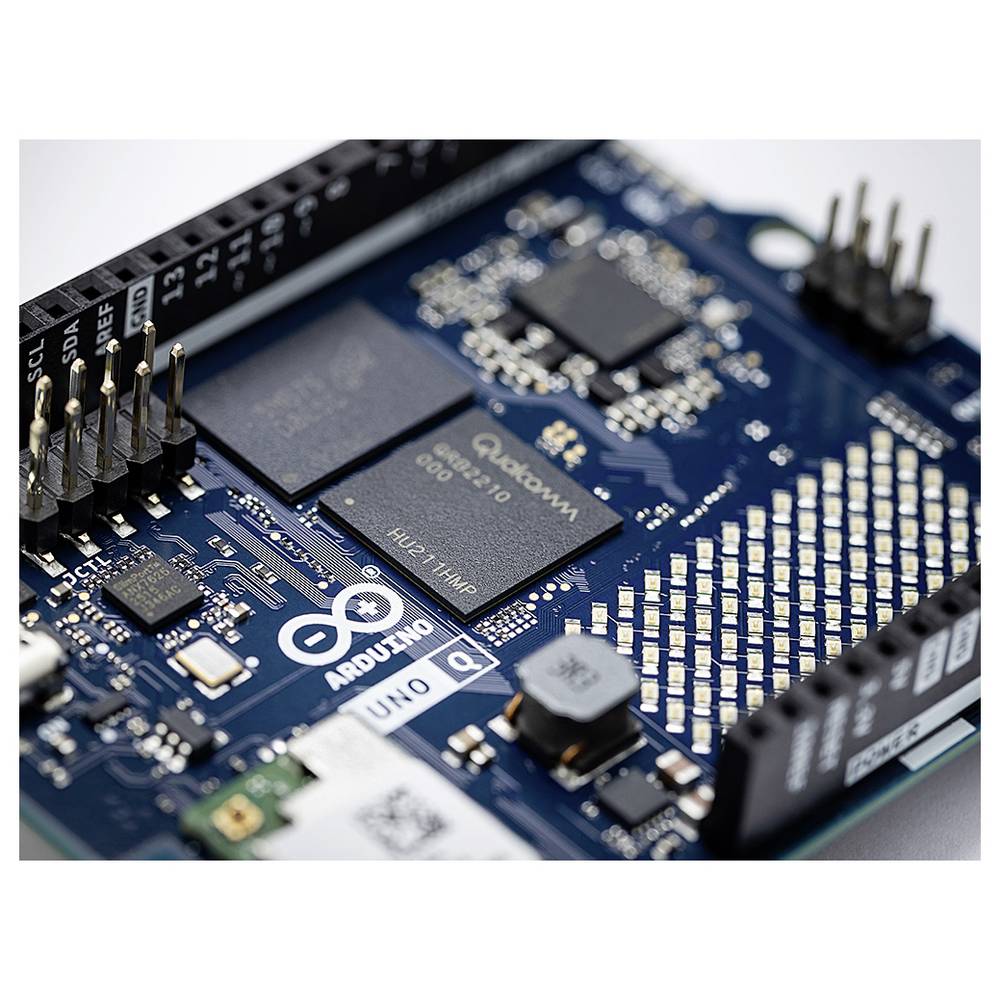
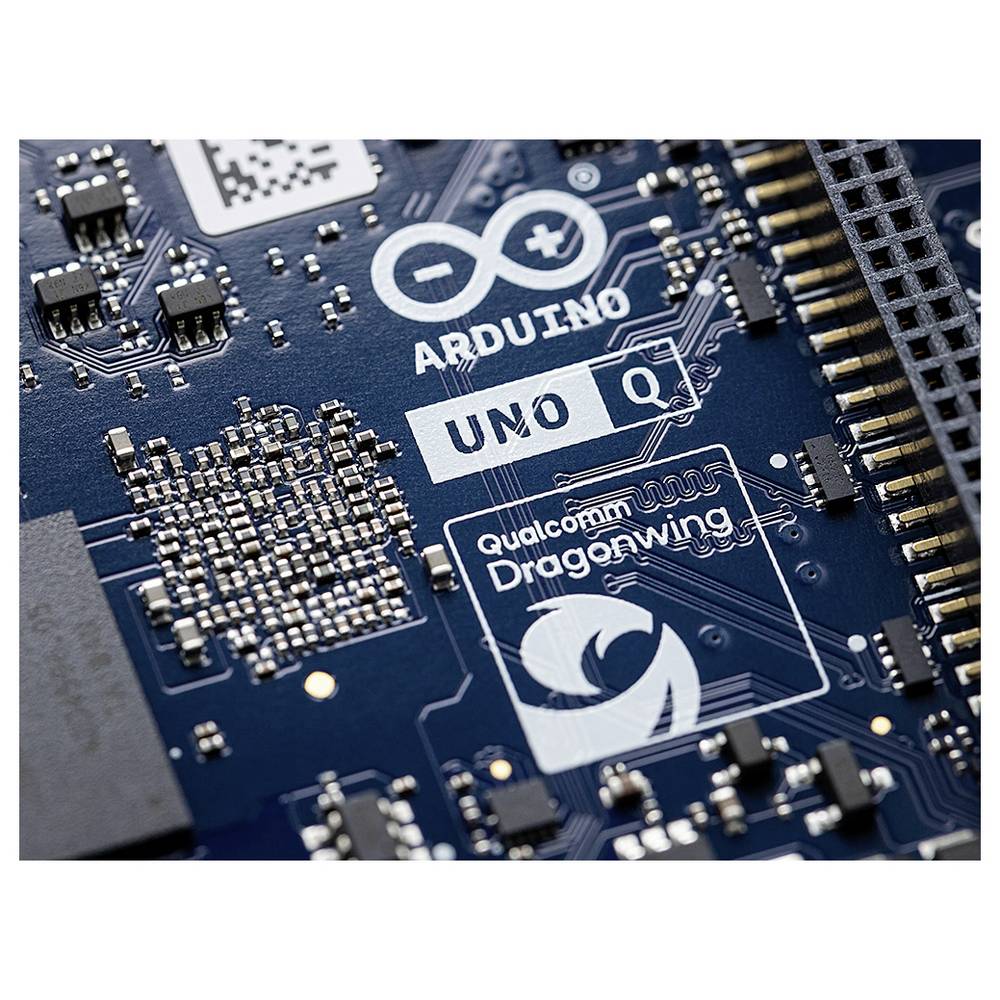
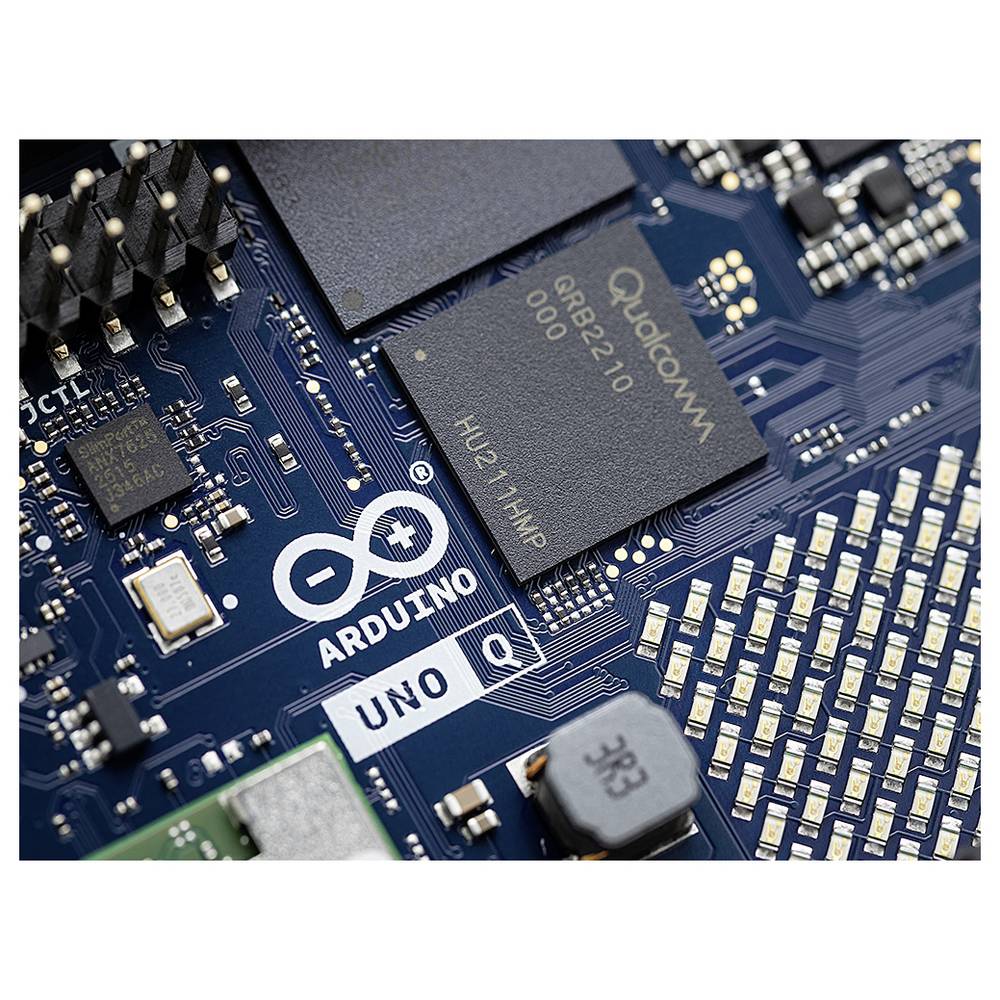
The Arduino UNO Q is a sophisticated development board in the classic Arduino UNO form factor, combining the strengths of a single-board computer with the real-time capabilities of a classic microcontroller – ideal for demanding IoT, AI, vision, and industrial applications. As a "dual-brain" platform, the UNO Q integrates a powerful Qualcomm Dragonwing™ QRB2210 processor with a quad-core Arm® Cortex-A53 @ 2.0 GHz and an Adreno GPU, as well as a dedicated STM32U585 real-time MCU for time-critical control tasks.
With 2/4 GB LPDDR4 RAM and 16/32 GB eMMC storage, this board type offers significantly more memory and storage space than classic Arduino boards, enabling it to run complex Linux-based applications, local data processing, web services or even AI models directly on site – either via the integrated Arduino App Lab development environment or via standard tools such as Python or Arduino sketches.
Thanks to dual-band Wi-Fi 5 and Bluetooth 5.1 , USB-C host/device support, as well as classic UNO headers and Qwiic connectors, the UNO Q can be flexibly integrated into existing projects – whether prototyping, automation, image and sound processing, or industrial control tasks. Compatibility with UNO shields is maintained, making board upgrades particularly attractive for developers and businesses.
Technical data
| Technical Specification | Details |
|---|---|
| Microprocessor (MPU) |
Qualcomm Dragonwing™ QRB2210: |
| Microcontroller (MCU) | STM32U585 – ARM® Cortex®-M33 up to 160 MHz, 2 MB Flash, 786 KB SRAM |
| R.A.M. | 2 or 4 GB LPDDR4 |
| memory | 16 or 32 GB eMMC onboard |
| power supply | USB-C 5V max 3A; VIN: 7-24V |
| USB | 1× USB-C with host/device switching, power role switch and video-out |
| Connectivity | Wi-Fi® 5 (2.4/5 GHz), Bluetooth® 5.1 with onboard antennas |
| Interfaces | I2C/I3C, SPI, PWM, CAN, UART, PSSI, GPIO, JTAG, ADC |
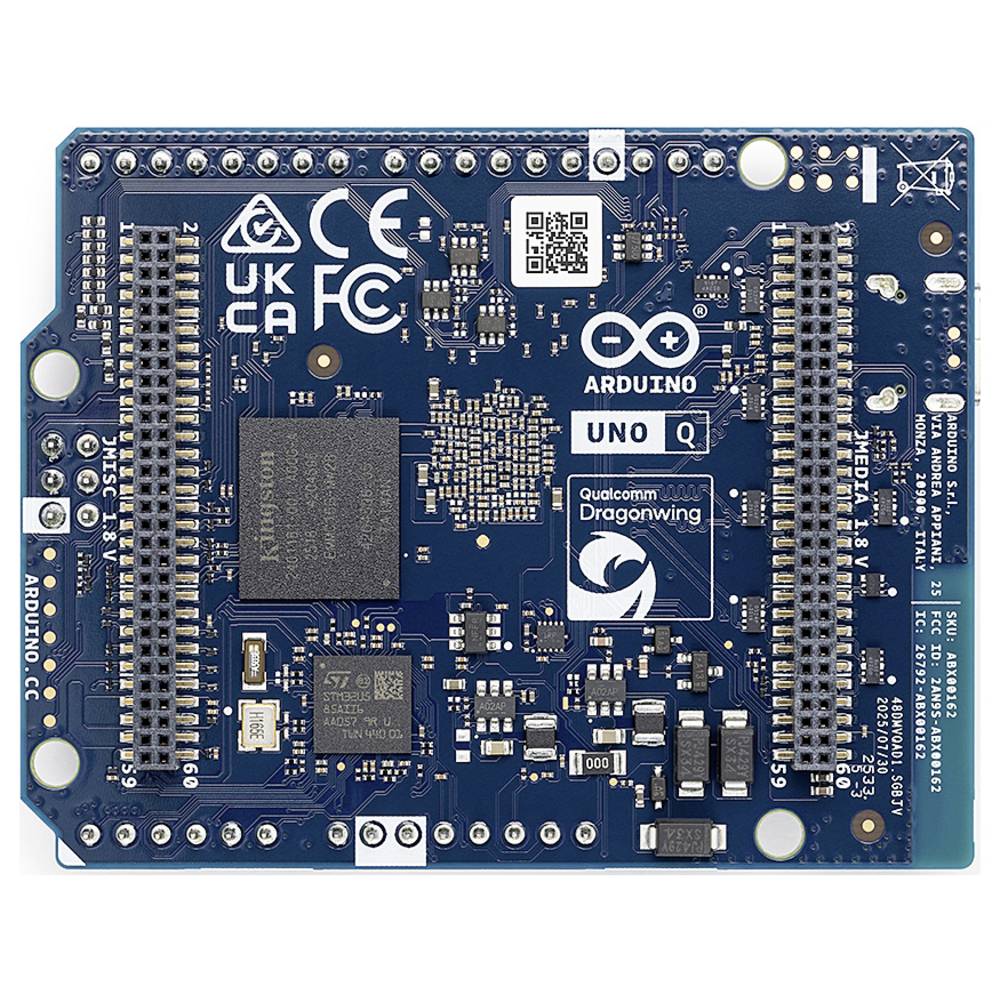
| video | Video output via USB-C, MIPI DSI pins on the JMEDIA header |
| Extras | 4× programmable RGB LEDs, 8×13 blue LED matrix, 1× Qwiic (3V3 I2C), 1× User Button, JCTL: MPU Remote Debug Connector |
| Audio | Microphone IN / Headphone OUT / Line OUT (JMISC) |
| Dimensions | 68.85 mm × 53.34 mm (UNO form factor) |
| MPU Operating System | Linux Debian OS with upstream support |
| MCU Real-time OS | Arduino Core on Zephyr OS |
| Container support | Docker & Docker Compose for running containerized applications |
| Supported operating systems for Arduino App Lab |
Windows: Windows 10 or newer (64-bit) macOS: macOS 11 or later (64-bit) Linux: Ubuntu 22.04 or newer and Debian Trixie (64-bit) |
Product variants
The Arduino UNO Q is available in two main versions:
-
2 GB RAM / 16 GB eMMC (Beginners with basic Linux or IoT experience)
-
4 GB RAM / 32 GB eMMC – for demanding applications with multi-tasking, AI models and desktop use.
The main difference lies in the storage capacity and RAM volume, which directly impacts performance in larger workloads, simultaneous processes, or desktop scenarios.
Scope of delivery
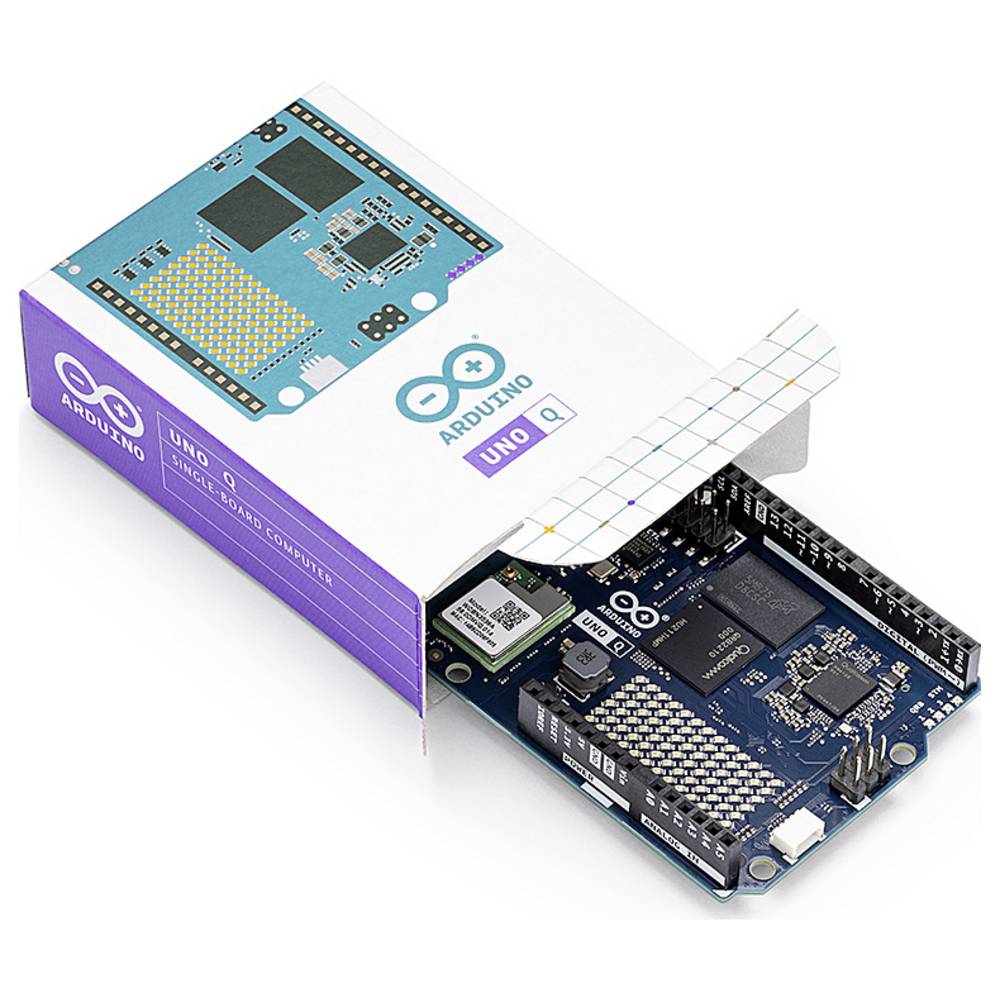
Included in the delivery is:
- 1 × Arduino UNO Q Board
Note: Power supply, USB cable or additional shield modules are not included and should be purchased separately.
Areas of application
The Arduino UNO Q 4GB is ideal for:
-
IoT prototyping and industrial control – WLAN/Bluetooth-based sensor and actuator control.
-
AI Edge Applications & Vision Systems – Image and audio data processing on the board.
-
Local data analysis & server functions – web services, local logging databases.
-
Automation & Robotics (B2B) – thanks to dual-processor architecture and real-time controllers.
-
Education & Prototyping – modern programming environments (Python / Arduino / Linux).
Especially in an industrial context , the combination of real-time MCU and Linux SBC opens up new possibilities for modular automation, smart production or IIoT applications.